2011년 6월 16일 목요일

Ecological Pyramid

Producers: Organisms, such as plants, that produce their own food are called autotrophs. The autotrophs, as mentioned before, convert inorganic compounds into organic compounds. They are called producers because all of the species of the ecosystem depend on them.
Consumers: All the organisms that cannot make their own food (and need producers) are called heterotrophs. In an ecosystem, heterotrophs are called consumers because they depend on others. They obtain food by eating other organisms. There are different levels of consumers. <!--[if !vml]--><!--[endif]-->There are primary consumer, secondary consumer, and tertiary consumer belong to consumers.
This pyramid helps one visualize the fact that in an ecological system there need to be many producing organisms at the bottom of the pyramid to be able to sustain just a couple of organisms at the top.
The pyramid represents the decrease in the amount of energy, the number of organisms and the biomass from the producer to the high - order consumer levels.

Pyramid of Energy
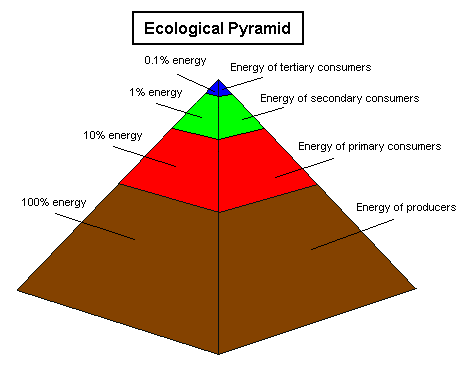
Much of the potential energy at each level never reaches the next level. Some of the energy that enters a food chain is used as each organism carries out its life functions (i.e. foraging, metabolic processes, reproduction, predator/prey behavior, and so on. Producers manufacture their own food source directly from sunlight by the process of photosynthesis. Consumers acquire energy through the ‘burning’ or breaking down of food molecules they consume (eat).


Pyramid of Numbers
The loss of energy at each trophic level also explains why there are usually fewer organisms in each higher trophic level. The total number of plants in a particular area would generally be higher than the number of herbivores that the plants support and the number of herbivores would be higher than the number of higher order carnivores.


Pyramid of Biomass
Biomass is the total mass of dry organic matter per unit of area. Each higher tropic level contains less biomass than the previous trophic level. Biomass is related to the abundance of organisms at each trophic level.
We did an experiment. That is concerned about ecological pyramid. We had human, wolves, snakes, mice, and decomposers. There are stations that you can get energy. By default, everyone can get one energy bar except decomposers. We can get only 3 energies each person. Human can only catch wolves, wolves can only catch snakes, snakes can only catch mice, and decomposers collect energy and put into stations. If someone caught by upper consumer, you have to give 1 energy bar to upper consumer. If you don’t have energy bar, you will be out. The time remit was 3 minutes.
First, we experimented by 1 wolf, 4 snakes, 6 mice, 2 decomposers, and 4 stations. The result was 1 wolf, and 4 mice survived. Second, we experimented by 3 wolves, 5 snakes, 3 mice, 2 decomposers, and 4 stations. The result was 3 wolves, 3 mice survived. Last, we experimented by 1 human, 1 wolf, 5 snakes, 5 mice, 2 decomposers, and 4 stations. The result was 1 human, 3 mice survived.
You can see the result shows how ecological pyramid is important. If pyramid became inverted triangle, the ecosystem will be destroyed.

What is Invasive species

Hello! I’m a Mr.Science!
Today, I want to introduce about Invasive species!


What is Invasive species?
-> Exotic that spreads into natural or semi-natural habitat, causing a major change in the habitat and how it functions.


How do they get there?
-> Accidental introduction
-> Purposeful introduction and accidental spread
-> Purposeful introduction and spread
-> Expanding range because humans have changed the area 


Bad Result
-> Out – Compete native species
-> Cause disease in native
-> Prey on native species
-> Degrade habitats – erosion, loss of soil
-> Change natural processes (natural fire protection)


Asian clams, for instance, were introduced to the coast of the Amefias. In these areas, they don’t have natural predators. They also reproduce quickly. As a result, Asian
Clams are threatening to overtake many coastal areas.


Corbicula fluminea
Scientific classification
Kingdom:Animalia
Phylum:Mollusca
Class:Bivalvia
Subclass:Heterodonta
Order:Veneroida
Suborder:Sphaeriacea
Superfamily:Corbiculoidea
Family:Corbiculidae
Genus:Corbicula
Species:C. fluminea
Binomial name
Corbicula fluminea
(O. F. Müller, 1774)


They do so by taking over the space and using the nutrients that local species would normally use.
Clams consume plankton for nutrients-the same foods that many smaller fish eat.
Thus, lacking nutrients, many fish species have died in areas invaded by the clams.


2011년 5월 10일 화요일

Hi~! This is Mr. Science~!

Mass Extinction

The extinction of a species or even whole families of animals and plants is so normal in Earth’s history. But it is not as bad as it sounds. The death knell of some species and the rapid rise of others is the reason so many kinds of life have been able to evolve.
There have been five or six in Earth’s history when the extinction clock has struck a particularly dark hour - marking the greatest mass extinction events.

Let’s start~!

First! Oxygen Holocaust (~2.5 to 2.2 billion years ago)

The first life-forms to rule the Earth were microbes that lived in an oxygen-free world. Oxygen, it turned out, was deadly poison to these ‘anaerobes.’ So when evolution spawned oxygen-gas-spewing microbes, the anaerobes were in big trouble. Earth was changed forever by this, the first major extinction event. But without it, oxygen-breathing animal life could not have evolved.

Second! Late Ordovician (~445 million years ago)

This event is perhaps the third largest mass extinction on record it terms of the general lost: 57 percent in all. At least two major extinction events appear to have piggybacked in this case. Most living creatures inhabited the sea at this time. Of the ones that left fossils, approximately 50 percent hit a dead end. The cause of all these losses might have been a drop in sea level spurred by plate tectonics. All that ice locked up on land would have dramatically lowered the sea levels worldwide, making things tough for shallow marine life - which comprised the majority of life on Earth at this time.

Third! Late Devonian (~370 million years ago)

Scientists believe that several deadly pulses blended together over time to create this mass extinction event. About half of genera known in the fossil record were extinguished, including many reef-building corals and other shallow marine organisms. The marine die-offs suggest that fluctuating sea levels may have played havoc with coastal habitats. Possible co-conspirators were land plants, which invaded and greened the continents and removed more carbon dioxide (a greenhouse gas) from the atmosphere. This might have led to global cooling, with more and larger glaciers pulling water from the world’s oceans.

Fourth! End Permian (~250 million years ago)

This was the most extinction event. It was the closest life has ever come to ending on Earth. A whopping 83 percent of all genera on land and sea went extinct at this time, including 96 percent of all marine species and 70 percent of all land vertebrates. A mass extinction of this magnitude liked had many interlinked causes. Among those we know about is the eruption of the colossal Siberian Traps, which probably jolted the Earth’s climate. Another player was the Supercontinent Pangea, which was just taking shape and altering ocean currents to create some stark temperature extremes between the equator and the poles.

Fifth! End Triassic (~200 million years ago)

As with the vastest majority of mass extinction events, the details of this one are largely a mystery. About one-fifth of all families of marine life were wiped out, which comes to about 48 percent of all genera, including ammonites, many reef-building corals, conodonts and seed ferns. The mostly like cause of all this activity was the eruption of the Central Atlantic magmatic province. Not only were more than 2 million cubic kilometers of lava spewed out over a period of many centuries, but more than 2 quadrillion kilograms of sun blocking sulfur was released, along with about twice as much climate-warming carbon dioxide. The result was probably a deadly climate roller coaster.

Sixth! End Cretaceous (~65 million years ago)

If you know of only one mass extinction event, it is probably this one. It is the most famous mass extinction event of them all, though not the biggest. It was the end of the great ‘age of reptiles’ - the demise of all but a small line of dinosaurs, which evolved into today’s birds. But a lot more than dinosaurs went extinct. This event saw the end of 17 percent of all families of living things, which translates into 50 percent of genera found in the fossil records at that time. Although the most popular theory is that an asteroid impact caused this mass extinction event, some researchers suspect it may not have been so simple or so sudden.

Last! Humanity’s Close Call (~73,000 years ago)

This event may have been a major squeaker for Homo sapiens: the titanic eruption of the Toba super volcano on the island of Sumatra. Some researchers think this caldera explosion caused global disruptions to ecosystems, reducing humanity to a few pockets of people - perhaps 10,000 individuals in all. Though this is not considered one of the ‘big five’ mass extinction events, it was almost our ‘big one’ and underscores the power of nature to wipe out species with little notice. 

2011년 5월 8일 일요일

Hi~ I'm Mr. Science~!

Here are some key terms you need to know!!!

1. Ecology
=> the study of the interaction between living things and non-living things in the environment

2. Ecosystem
=> in an area defined by an ecologist, the set of relationships between populations of species and between them and non-living factors in their environment

3. Food Chain
=> a step-by-step sequence linking organisms that feed on each other, beginning with a food source, such as a producer or detritus, and continuing with a sequece of consumers

4. Producer
=> an organism that uses photosynthesis or another form of chemical synthesis to make food

5. Consumer
=> an organism that must eat producers or other consumers to survive

6. Herbivore
=> an animal that eats plants

7. Carnivore
=> an animal that feeds on other animals

8. Omnivore
=> an animal that eats both plants and animals

9. Detritus
=> waste from plants and animals, including their dead remains

10. Decomposer
=> an organism that feeds on detritus, in the process releasing nutrients to the soil and water, where they can be used by other organisms

11. Habitat
=> the conditions required for the survival of a species

12. Biodiversity
=> the number of species in an ecosystem, and the variety within those species

Hey guys~!!! Read this~

Now let's look at some examples of the key term above~~~ ^^

3. Food Chain
   This is the example of marine food chain:

4. Producers
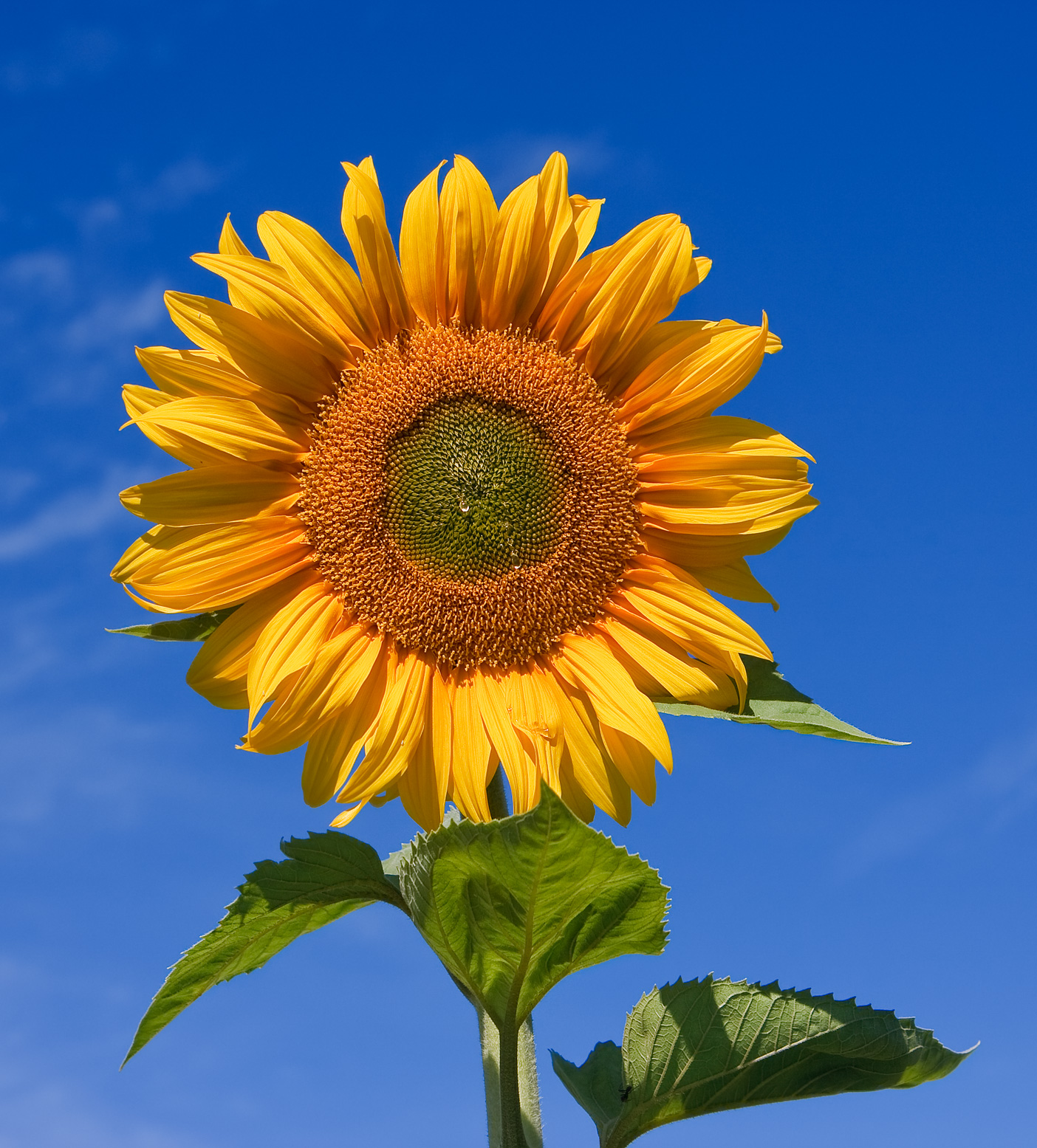
   Example of them would be green plants, such as sunflower, andira, vanda.                                               
File:Sunflower sky backdrop.jpg
Sunflower
 
File:Andira humilis.jpg
Andira
 
File:Wanda blau.JPG
Vanda


5. Consumers
   Examples of consumers are tigers, rabbits, humans, and so on.
 
Tiger
 

Humans

Rabbit


6. Herbivore
Some examples of this are horses and cows.
Horses

cow


7. Carnivore
Two examples of this are tigers and lions

Tiger
 
Lion


8. Omnivore
An example of this is human-beings.
Human-beings
10. Decomposer
An example is bateria.

Bacteria


2011년 4월 27일 수요일

Hey~ another attention~

Today, I will talk about Extinct and Mass Extinct.
Before I talk about that part, we need to know some word description and example.
I will you explain now. 


This is the description of some 5 words.
classification
Description
Extinct
A species of animal or plant that is extinct no longer has any living members, either in the world or in a particular place. 
Endangered
To endanger something or someone means to put them in a situation where they might be harmed or destroyed completely.
Extirpated
Any species that no longer exists in one part of Canada but can be found in others.
Threatened
Any species that is likely to become endangered if factors that make it vulnerable are not reversed.
Vulnerable
Any species that is at risk because of low or declining numbers at the fringe of its range or in some restricted area.


This is the example of those five categories. 

Extinct

Blue walleye.
(The last fish of this species was taken from lake Erie in 1965)
Kingdom:
Phylum:
Class:
Order:
Family:
Genus:
Species:
Subspecies:
S. v. glaucus


Endangered

Eastern Cougar.
(sightings of this large cat are very rare.)
Kingdom:
Phylum:
Class:
Order:
Family:
Genus:
Species:
P. concolor
Subspecies:
P. concolor couguar


Extirpated

Grizzly Bear 
(No longer found in Manitoba and Saskatchewan, but still found in the mountains of Alberta and British Columbia)
                                                            
Kingdom:
Phylum:
Class:
Order:
Family:
Genus:
Species:
Subspecies:
U. a. horribilis


Threatened


File:AlabamaCavefish.jpg


Alabama 
(The Alabama cavefish, Speoplatyrhinus poulsoni, is a critically endangered type of cavefish which lives in underground pools in Key Cave, located in northwestern Alabama, United States on the Key Cave National Wildlife Refuge.)


Scientific classification
Kingdom:Animalia
Phylum:Chordata
Class:Actinopterygii
Order:Percopsiformes
Family:Amblyopsidae
Genus:Speoplatyrhinus
Species:S. poulsoni
Vulnerable

The Endangered bilby  Photo: DERM


Australia's Easter 
( It is ranked as a Critical priority under the Department of Environment and Resource Management Back on Track species prioritisation framework. )


Scientific classification
Kingdom:Animalia
Phylum:Chordata
Class:Mammalia
Infraclass:Marsupialia
Order:Peramelemorphia
Family:Thylacomyidae
Genus:Macrotis
Species:M. lagotis
More information  : http://en.wikipedia.org/wiki/Bilby